What they take home

What we are actually teaching.

  1. Discipline before technique.

    Show up. Listen. Focus and finish what you start. Good habits create better players, and they outlast the sport.

  2. Responsibility for their own progress.

    Children are told what they work on and why. They learn to take charge of their development, which is a skill that transfers well beyond a court.

  3. Composure under pressure.

    Competition is where character becomes visible. We coach how to make decisions and respond to mistakes. A skill for life.

We don't measure success by how quickly a child competes. We measure it by how consistently they develop.
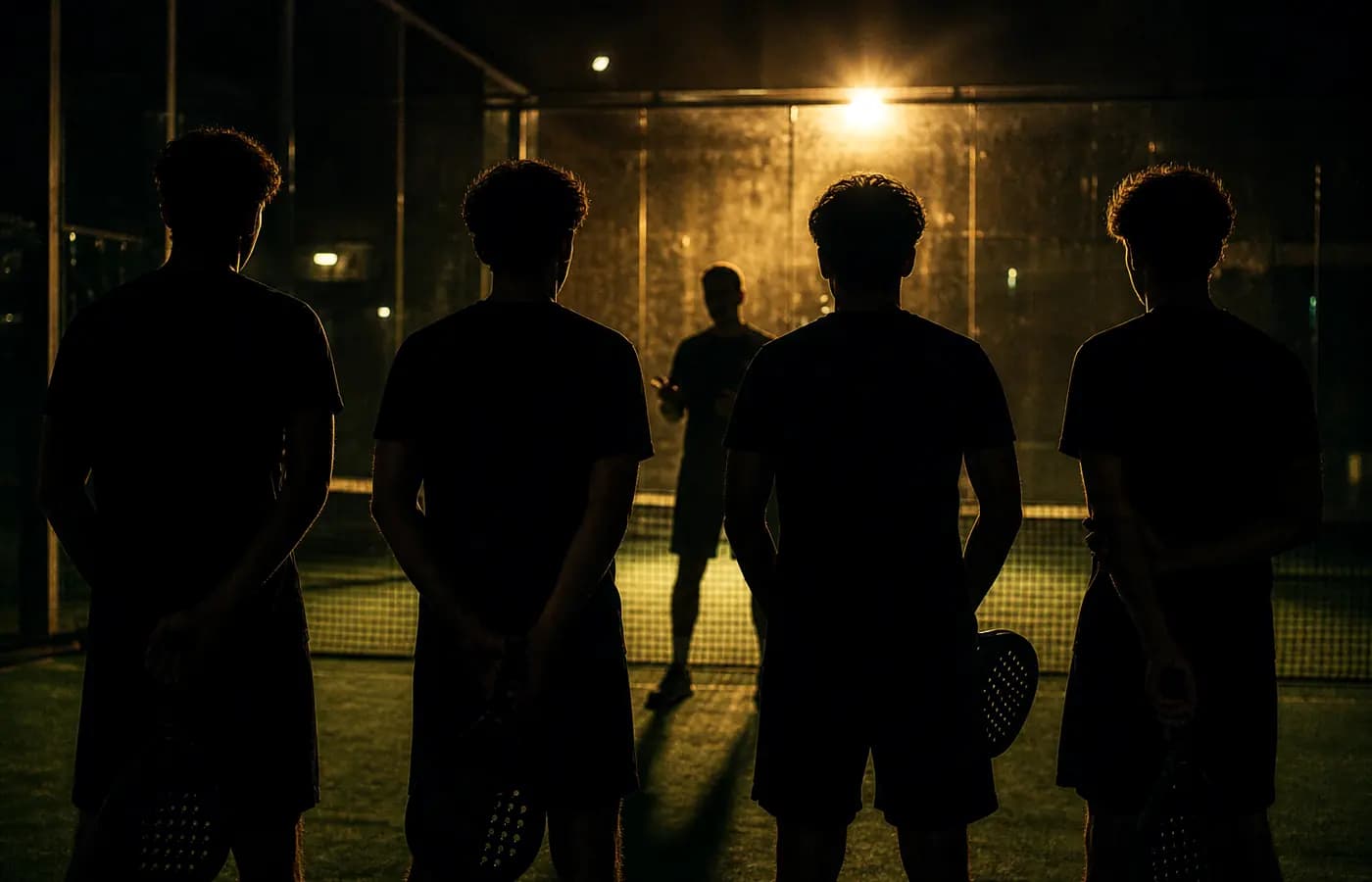
Young players in silhouette listening to their coach on court at night

The 15:30 – 17:30 window, weekdays. Four players per court.

The pathway

Where it leads, if they want it to.

Every child develops. Competition is a pathway, not a requirement.

  1. Junior Development

    Building strong foundations through structured training by age and level.

  2. Performance

    For players ready to compete weekly, with tactical guidance and tournament planning.

  3. Elite

    High-performance training for players with competitive ambition and ranking goals.

No child is pushed along it. The pathway exists so that ambition has somewhere to go.

Your digital training platform

Better communication. More clarity. Total transparency.

An external platform we use for communication and progress, so what happens in a session does not stay in the session.

What the player gets

  • Post-session feedback
  • How they felt
  • Objectives and focus
  • Progress tracking
  • Exercises and videos
  • To keep improving

What the parent gets

  • Visibility of progress and feedback
  • Communication with the coach
  • Understanding what we're working on
  • Updates and important announcements

One academy year

September to June.

The Junior Programme runs from September to June, allowing coaches to build development progressively rather than restarting every few weeks. Consistent structure. Real progression. Better results.

The parent report

Clear progress. Clear objectives.

Every three months you receive a structured written review of your child's development: technical, tactical, physical and behavioural, compared with the previous cycle, and followed by the objectives and plan for the next one.

It is the same document our adult members receive. Parents tend to recognise it immediately, because it is a report card, and it treats sport with the seriousness school gets.

No guesswork. Just clear direction.

Padelife Academy

Limassol · Cyprus

Coach Report

Player

A. Constantinou

Period

Progress Review · December 2026

Level

Padelife 4Intermediate

TechniqueTacticsPhysicalMatch playMindset
DimensionScoreΔ
Technique68+10
Tactics54+10
Physical61+4
Match play59+12
Mindset72+8

Coach's note

Volley height is now consistent under pressure. Next cycle we move the work to court position after the lob, since you are winning the point twice before finishing it once.

Next review

Objectives set for the cycle ahead

Sample Coach Report · issued every three months

Practical

The details parents ask about first.

Training frequency
2 or 3 sessions per week
Ratio
Four players per court maximum
Equipment
Training equipment provided. Rackets available when required.
Languages
English, Spanish and Arabic
Window
15:30 – 17:30, weekdays
Grouping
By age and level
Coach Report
Every three months
Academy year
September to June

Limited places, to ensure quality coaching and individual attention in every group.

The first step to finding the right group for your child. The junior deck is written for parents and covers the programme, the reports and the investment in full.